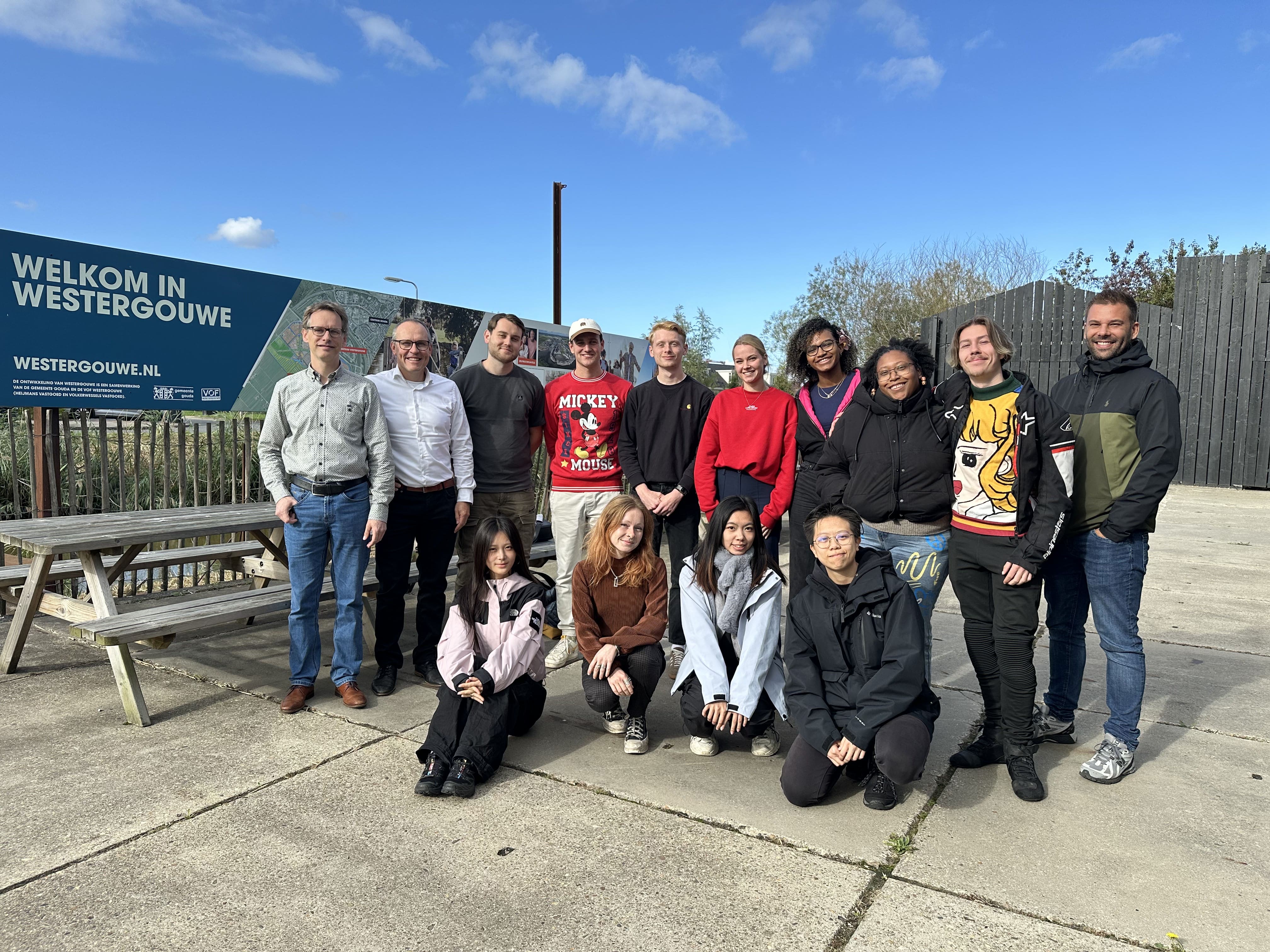
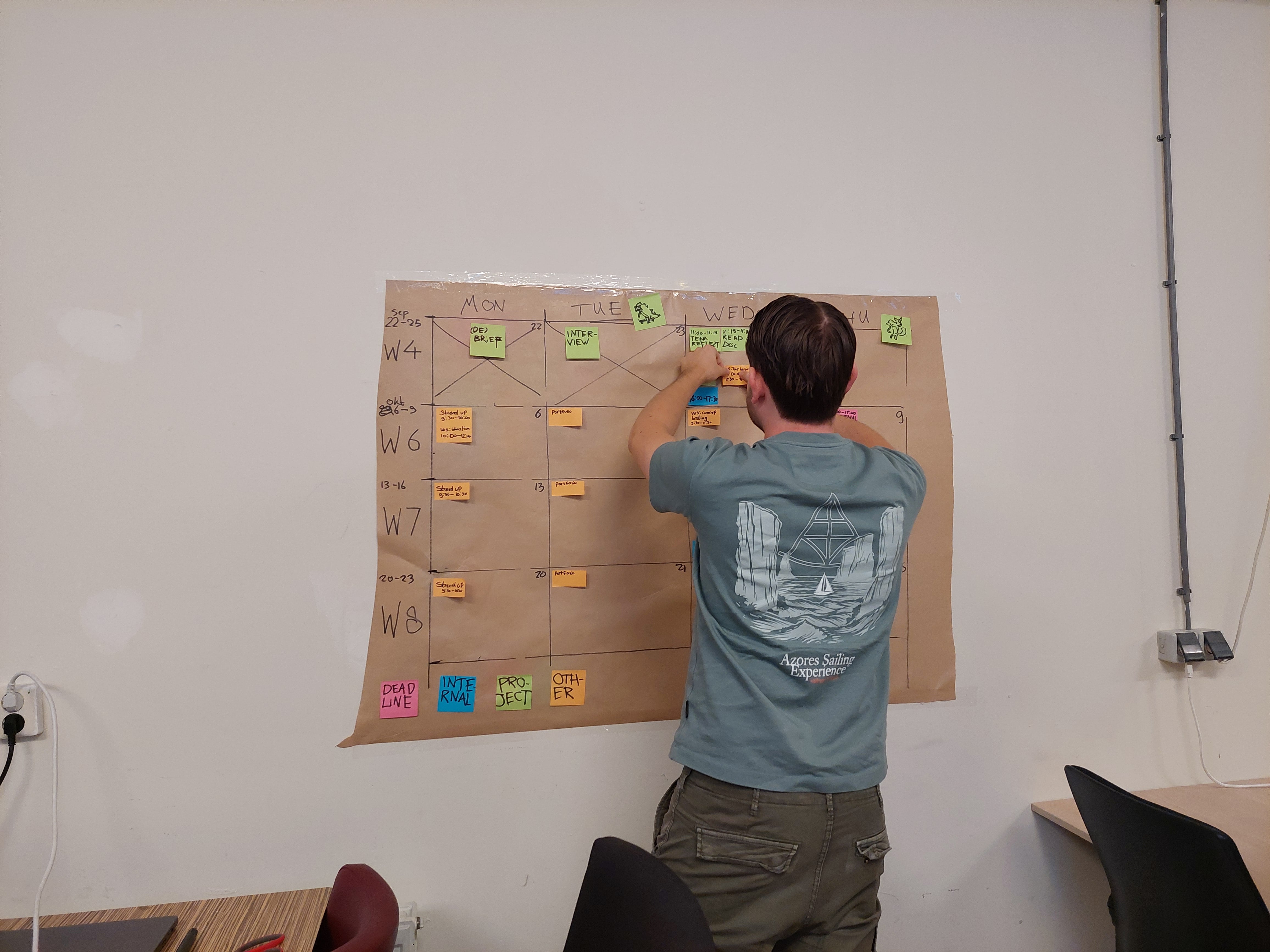
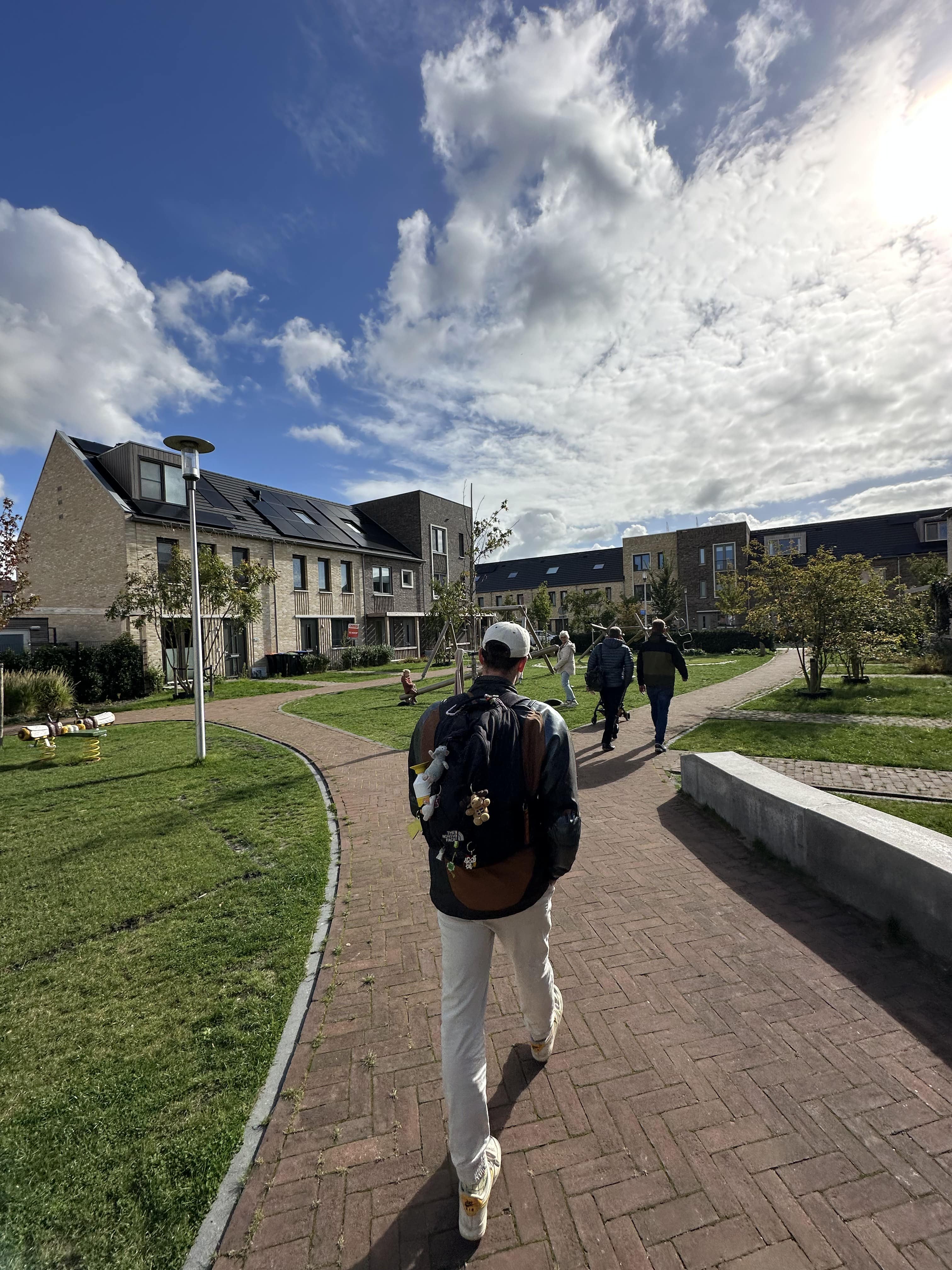
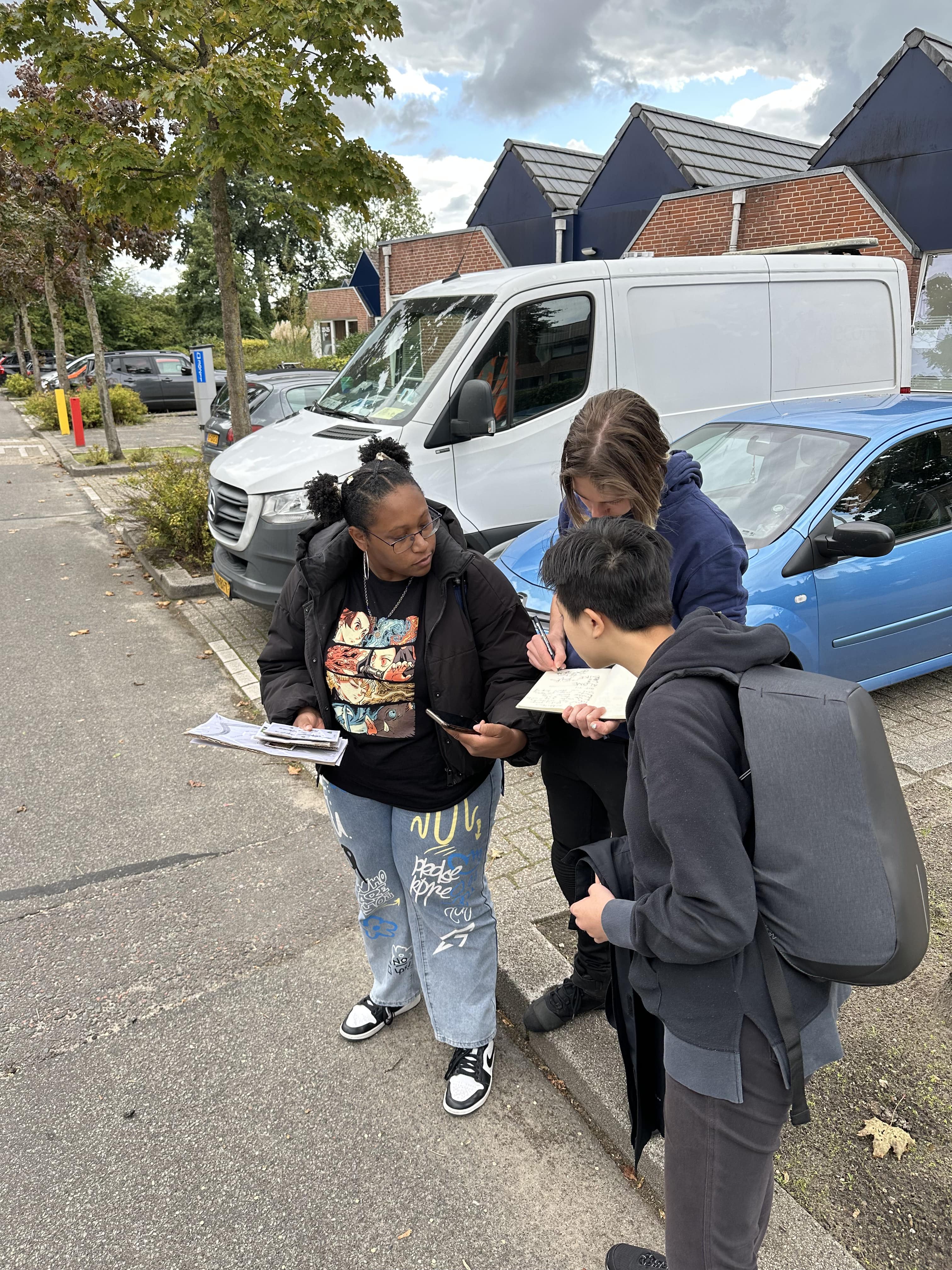
Westergouwe is a new residential area next to Gouda, that provides many ways for its residents to be able to walk and cycle within the district. Yet commuting to school by car remains common, which can lead to a dangerous and unsafe environment for children. That is why CoDesign Studio has been tasked with developing new and innovative ways to inspire residents to use different ways of transportation.

Design Thinking
Creative problem solving

Co-Design Facilitation
Facilitating to design together

User Research
Understanding needs of stakeholders

Presentation
Client pitch
Visual Design
Turning ideas physical
Reflection
Reviewing and learning
Solution
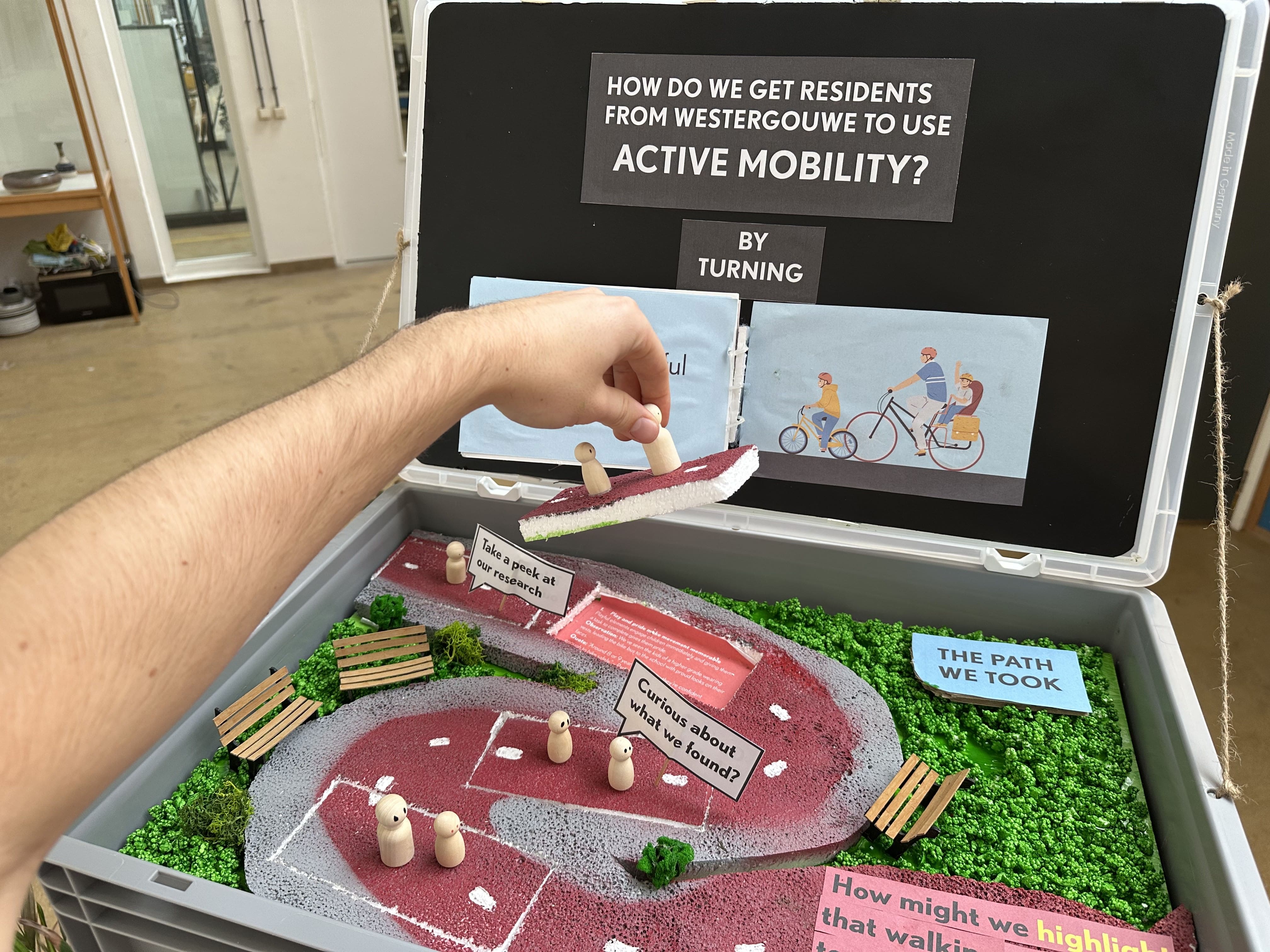
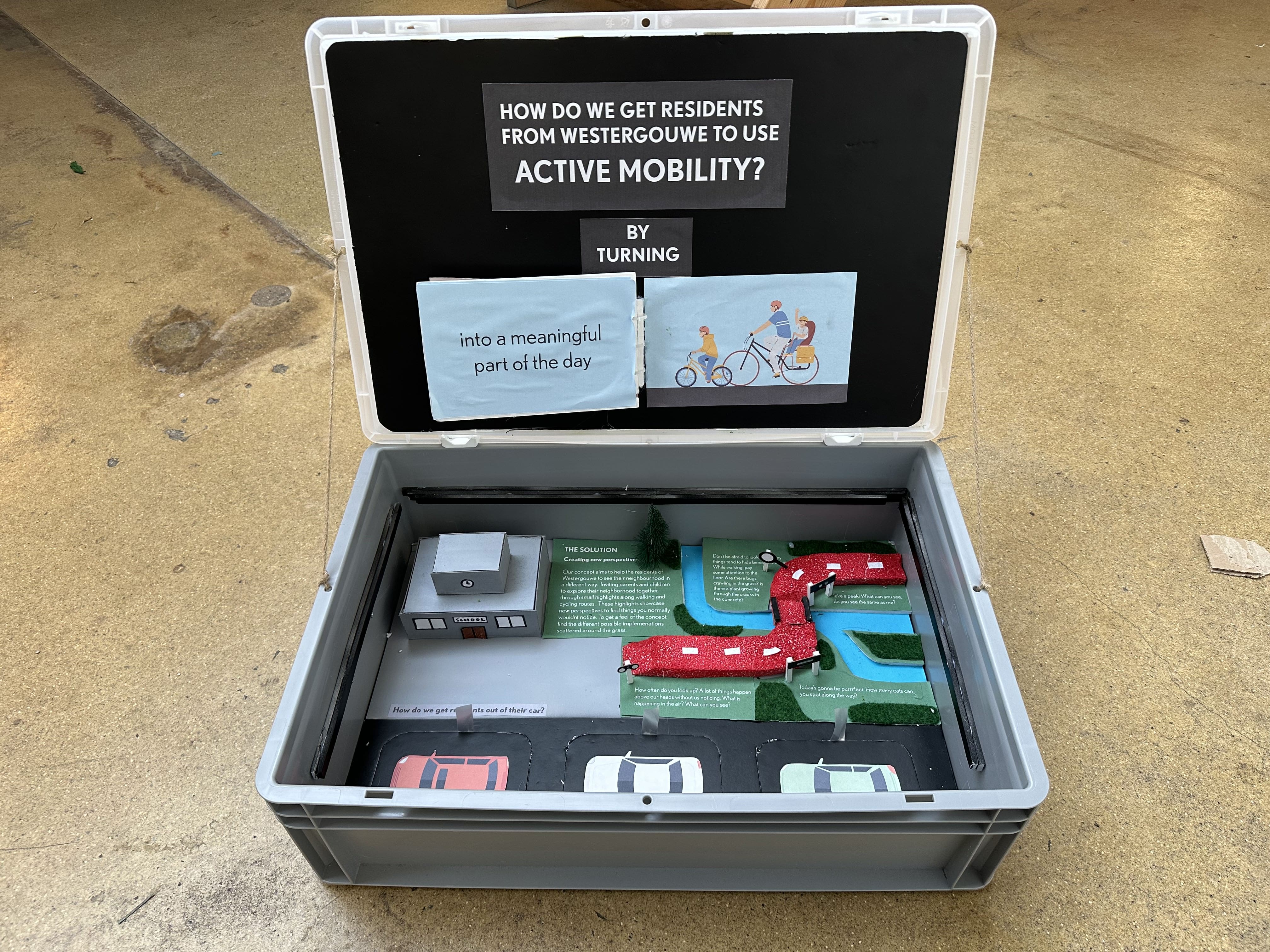
Our concept Hidden Highlights focuses on the first few months after the school opens, inviting parents and children to explore their neighborhood together through small highlights along walking and cycling routes. These points highlight the neighborhood in simple, fun ways. A looking glass can show planes or birds in the sky, signs can start interesting conversations while biking, and small loops let kids discover tiny creatures around them. This approach creates shared experiences and lasting memories. Parents, children, and friends explore the highlights together, making the daily commute an enjoyable moment of connection.
Learned & Achieved
Project Westergouwe was the first time I went through the entire design process, this did take some adjusting. Right from the first client meeting, my head was spinning with ideas. I naturally wanted to dive in and start creating immediately. But we stuck to the process. After conducting research, building a prototype, and going through phases of diverging and converging, we ended up with ideas that were far stronger than what we started with.
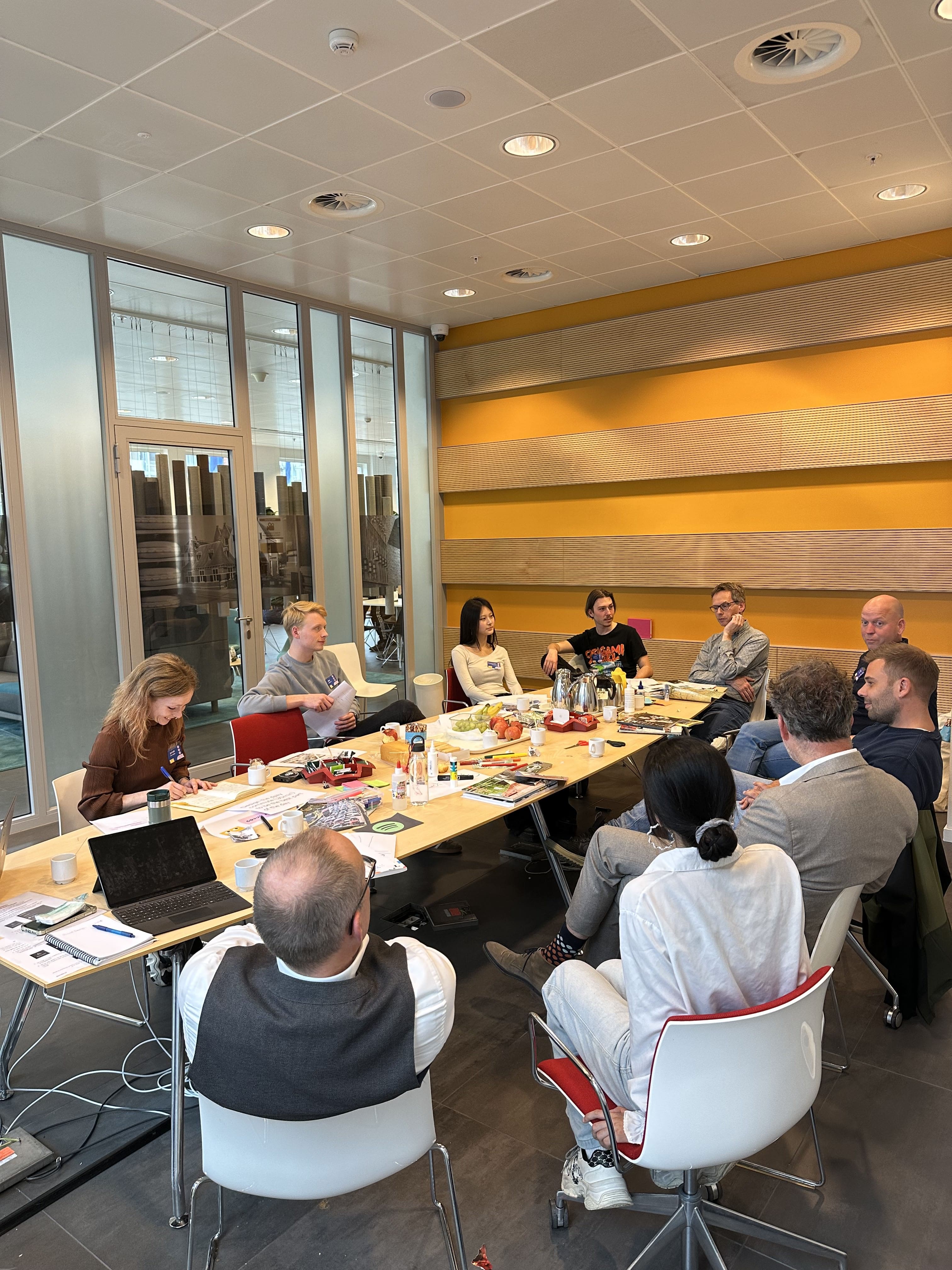
Our team worked really well together, I especially enjoyed ideating with Jason. We were constantly spitballing ideas, and because he could sketch quickly, it was easy to visualize all different concepts. Another first for me was organizing a Co-Design session. Going into it I was worried about whether corporate clients and civil servants would engage with us in designing a solution. However, because we prepared the session well, it went smoothly and we received valuable insights and feedback.
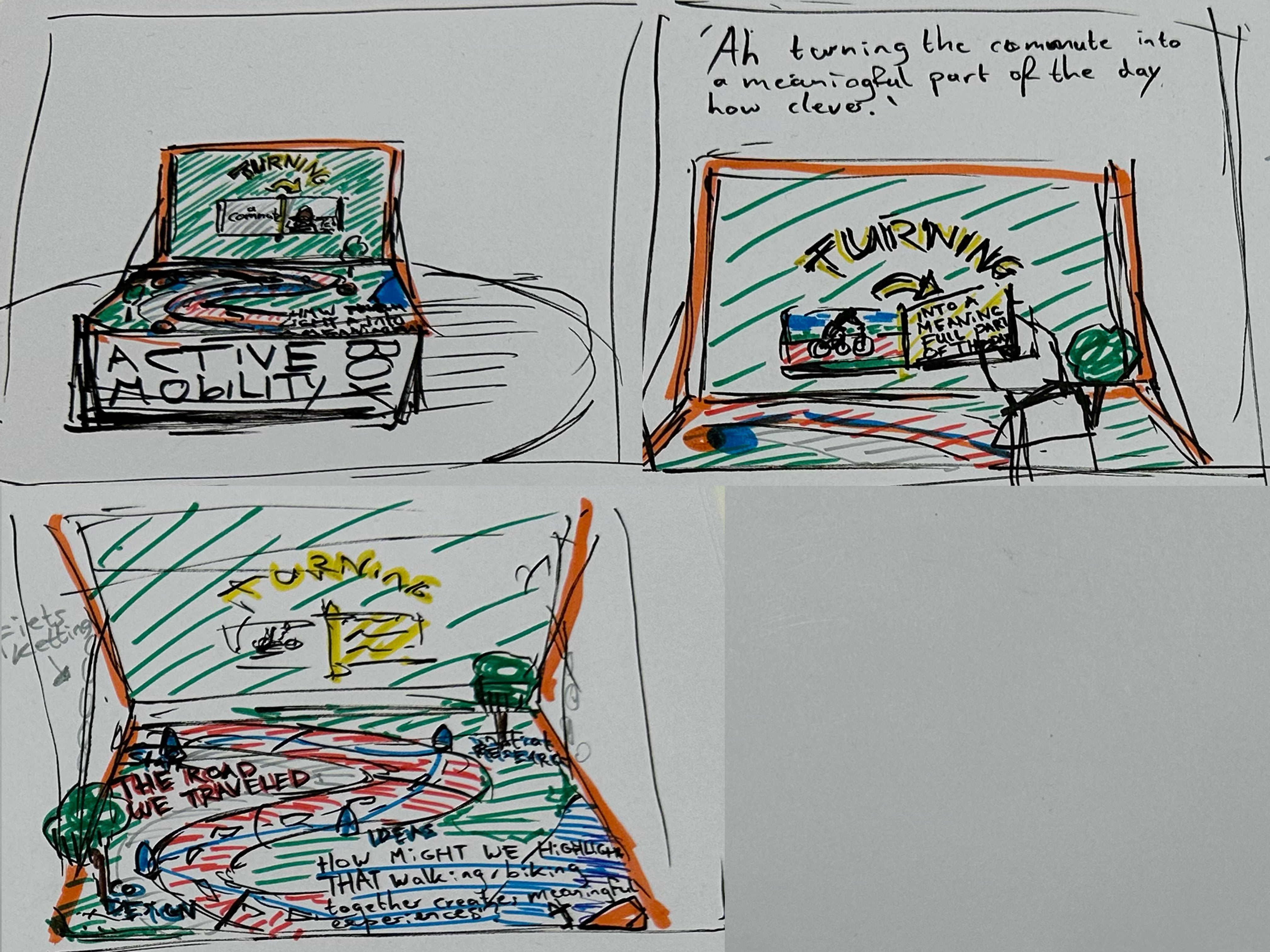
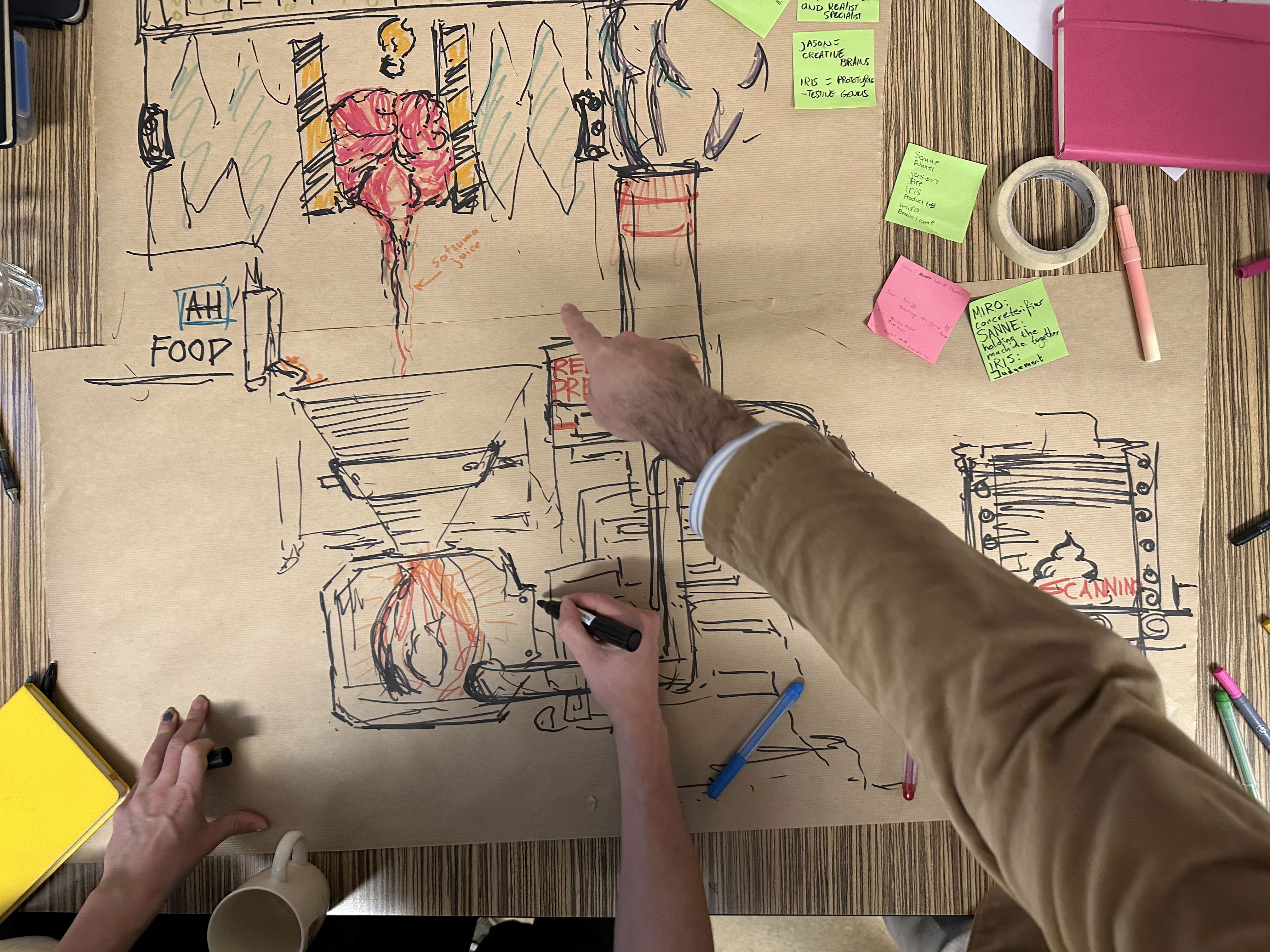
We ended the project with a reflection exercise, which turned out to be the most fun reflection I have ever done. Our team sketched a large machine together to illustrate who took on which roles and why we valued them. I found my place as the “concretifier,” making sure plans were realistic and ideas were clearly communicated. This project taught me a lot about collaboration, trust in the design process, and a valuable reflection exercise.
My role & Impact
As we are a multidisciplinary team, everyone naturally took on different roles. For this project, I really wanted to focus on working creatively. After meeting the client for the first time, I chose to create the initial designs for the debriefing, making sure they matched the style of the project and that the language was clear. We later used these designs as the base for our final documentation.
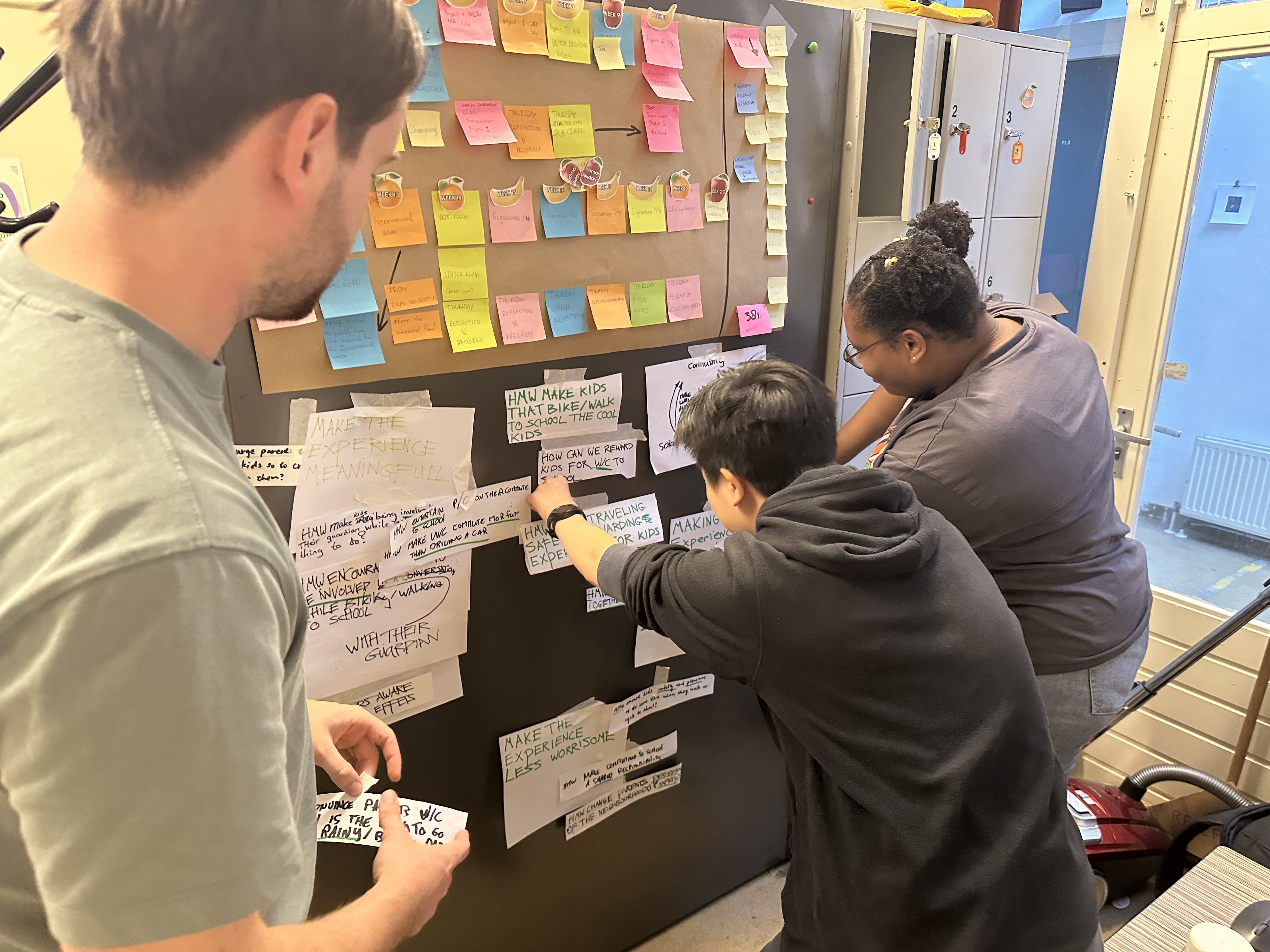
The team was energized, and I led the process of shaping the How Might We question. We experimented with many different formulations, debating and refining the wording until it captured the challenge correctly. Although throughout the project the question kept changing as we gained more insight.
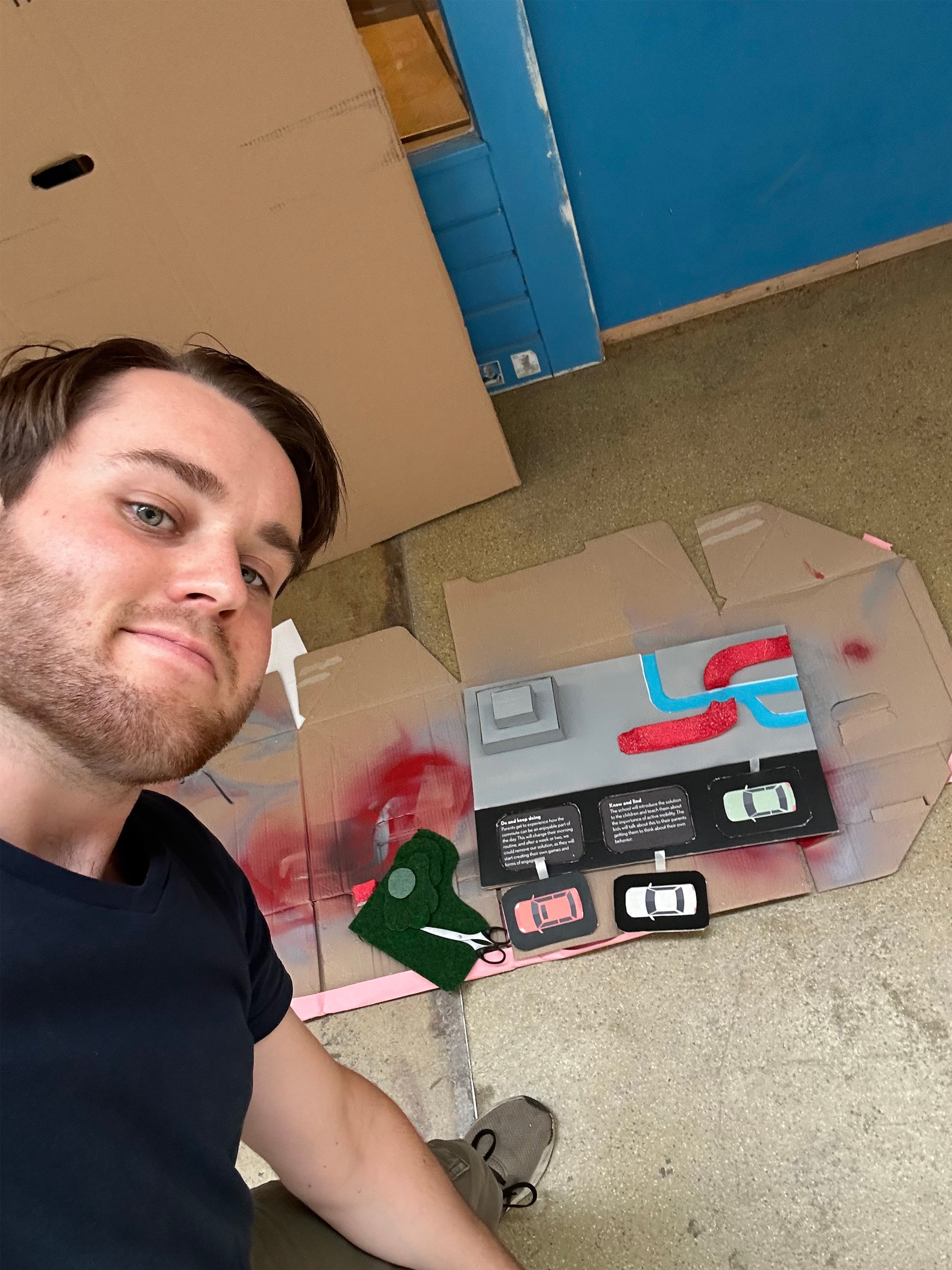
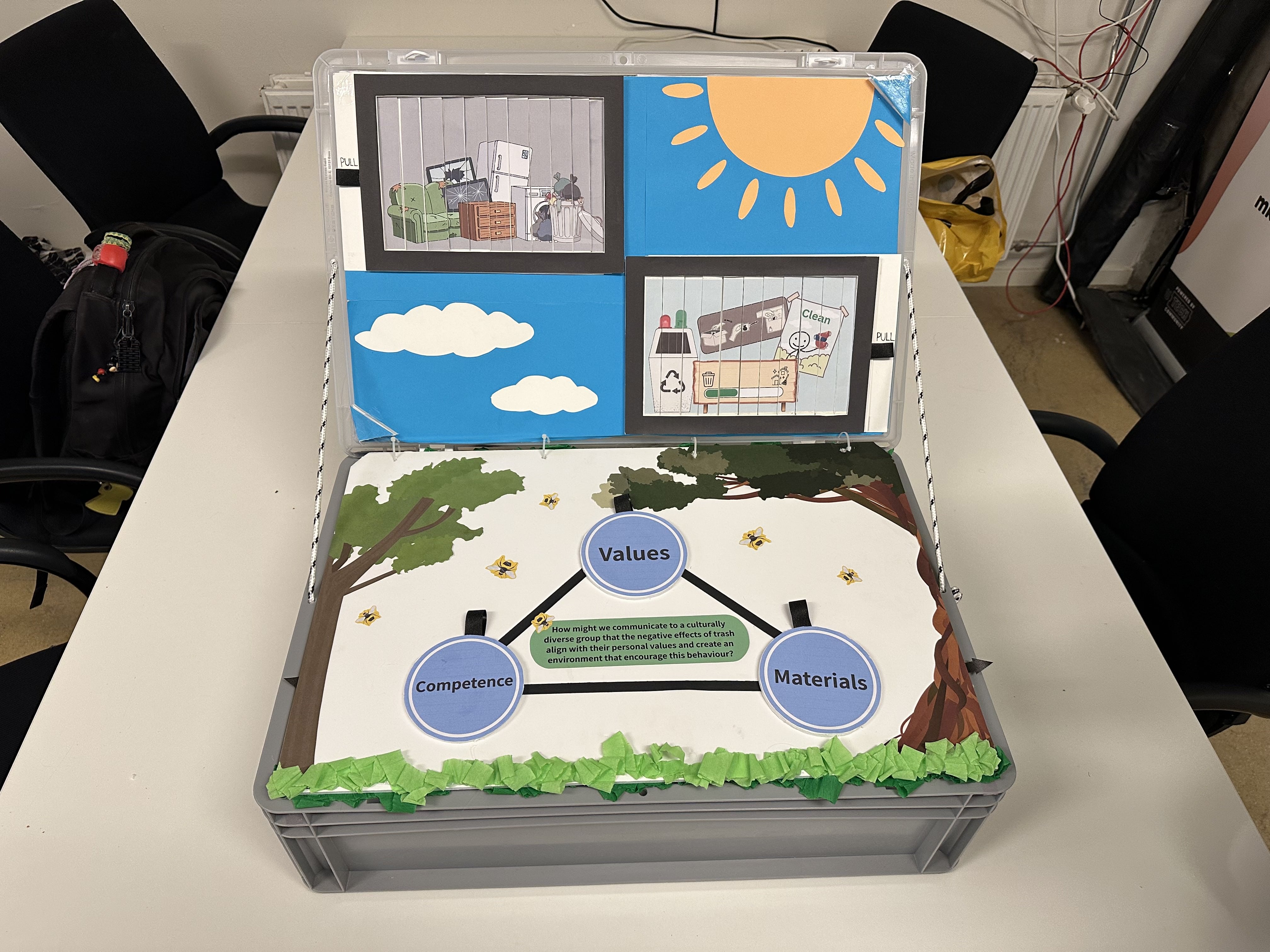
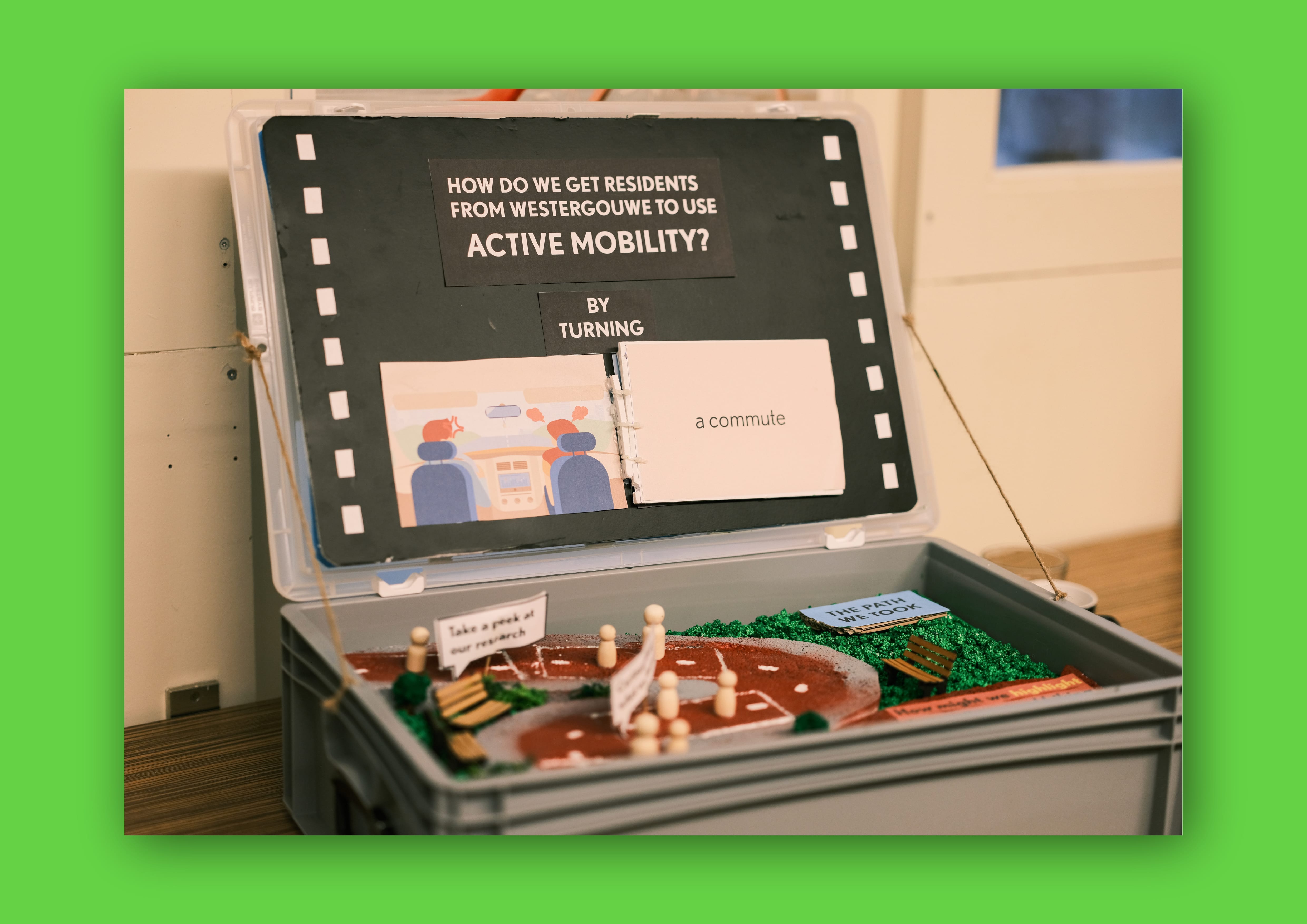
Another achievement I am proud of is creating the Box. First, we translated our concepts into ideas that could be visually realized within the box. Together we sketched a rough blueprint. Then it was time to build and finalize it. Sanne focused on documentation, Iris worked on props and decorations, Jason made sure the stories connected all the elements and key insights, and I worked on creating all the layers and the main visuals. It was nice to work on something physical again and see how people interact with our end result.
Solution
Our concept Hidden Highlights focuses on the first few months after the school opens, inviting parents and children to explore their neighborhood together through small highlights along walking and cycling routes. These points highlight the neighborhood in simple, fun ways. A looking glass can show planes or birds in the sky, signs can start interesting conversations while biking, and small loops let kids discover tiny creatures around them. This approach creates shared experiences and lasting memories. Parents, children, and friends explore the highlights together, making the daily commute an enjoyable moment of connection.
Learned & Achieved
Project Westergouwe was the first time I went through the entire design process, this did take some adjusting. Right from the first client meeting, my head was spinning with ideas. I naturally wanted to dive in and start creating immediately. But we stuck to the process. After conducting research, building a prototype, and going through phases of diverging and converging, we ended up with ideas that were far stronger than what we started with.
Our team worked really well together, I especially enjoyed ideating with Jason. We were constantly spitballing ideas, and because he could sketch quickly, it was easy to visualize all different concepts. Another first for me was organizing a Co-Design session. Going into it I was worried about whether corporate clients and civil servants would engage with us in designing a solution. However, because we prepared the session well, it went smoothly and we received valuable insights and feedback.
We ended the project with a reflection exercise, which turned out to be the most fun reflection I have ever done. Our team sketched a large machine together to illustrate who took on which roles and why we valued them. I found my place as the “concretifier,” making sure plans were realistic and ideas were clearly communicated. This project taught me a lot about collaboration, trust in the design process, and a valuable reflection exercise.
My role & Impact
As we are a multidisciplinary team, everyone naturally took on different roles. For this project, I really wanted to focus on working creatively. After meeting the client for the first time, I chose to create the initial designs for the debriefing, making sure they matched the style of the project and that the language was clear. We later used these designs as the base for our final documentation.
The team was energized, and I led the process of shaping the How Might We question. We experimented with many different formulations, debating and refining the wording until it captured the challenge correctly. Although throughout the project the question kept changing as we gained more insight.
Another achievement I am proud of is creating the Box. First, we translated our concepts into ideas that could be visually realized within the box. Together we sketched a rough blueprint. Then it was time to build and finalize it. Sanne focused on documentation, Iris worked on props and decorations, Jason made sure the stories connected all the elements and key insights, and I worked on creating all the layers and the main visuals. It was nice to work on something physical again and see how people interact with our end result.